Earth
Our Home Planet
What is Earth?
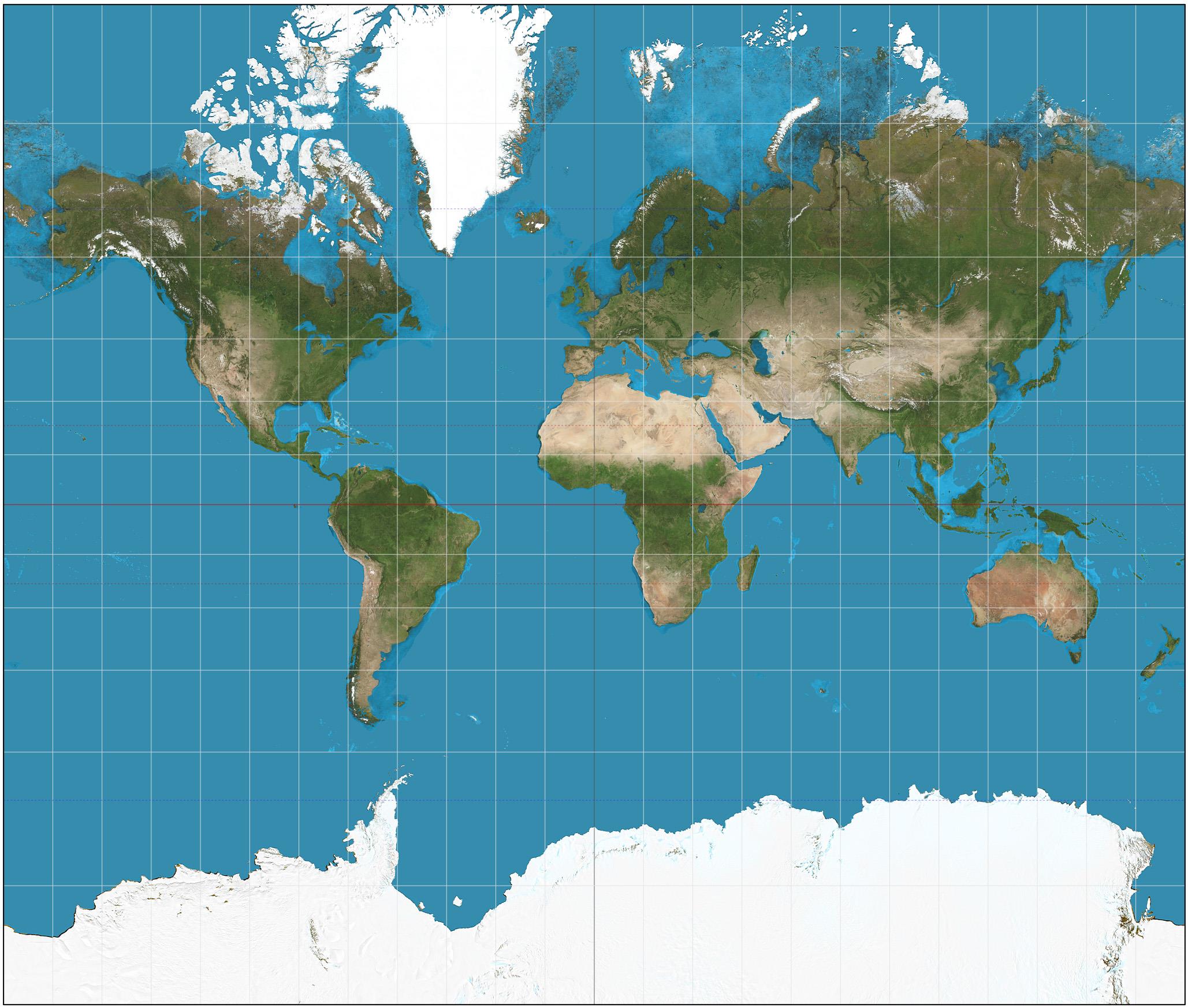
Earth is the third planet from the Sun and the only place known in the universe where life has originated and found habitability. While Earth may not contain the largest volumes of water in the Solar System, only Earth sustains liquid surface water, extending over 70.8% of the Earth with its ocean, making Earth an ocean world. Earth's polar regions currently retain most of all other water with large sheets of ice covering ocean and land, dwarfing Earth's groundwater, lakes, rivers and atmospheric water. Land, consisting of continents and islands, extends over 29.2% of the Earth and is widely covered by vegetation. Below Earth's surface material lies Earth's crust consisting of several slowly moving tectonic plates, which interact to produce mountain ranges, volcanoes, and earthquakes. Earth's liquid outer core generates a magnetic field that shapes the magnetosphere of Earth, largely deflecting destructive solar winds and cosmic radiation.
Atmosphere
Earth has an atmosphere, which sustains Earth's surface conditions and protects it from most meteoroids and UV-light at entry. It has a composition of primarily nitrogen and oxygen. Water vapor is widely present in the atmosphere, forming clouds that cover most of the planet. The water vapor acts as a greenhouse gas and, together with other greenhouse gases in the atmosphere, particularly carbon dioxide (CO2), creates the conditions for both liquid surface water and water vapour to persist via the capturing of energy from the Sun's light. This process maintains the current average surface temperature of 14.76 °C, at which water is liquid under atmospheric pressure. Differences in the amount of captured energy between geographic regions (as with the equatorial region receiving more sunlight than the polar regions) drive atmospheric and ocean currents, producing a global climate system with different climate regions, and a range of weather phenomena such as precipitation, allowing components such as nitrogen to cycle.
History
Earth, like most other bodies in the Solar System, formed 4.5 billion years ago from gas in the early Solar System. During the first billion years of Earth's history, the ocean formed and then life developed within it. Life spread globally and has been altering Earth's atmosphere and surface, leading to the Great Oxidation Event two billion years ago. Humans emerged 300,000 years ago, and have reached a population of 8 billion today. Humans depend on Earth's biosphere and natural resources for their survival, but have increasingly impacted the planet's environment. Humanity's current impact on Earth's climate and biosphere is unsustainable, threatening the livelihood of humans and many other forms of life, causing widespread extinctions.
Earth formation
A solar nebula partitions a volume out of a molecular cloud by gravitational collapse, which begins to spin and flatten into a circumstellar disk, and then the planets grow out of that disk with the Sun. According to nebular theory, planetesimals formed by accretion, with the primordial Earth being estimated as likely taking anywhere from 70 to 100 million years to form. Then, a Mars-sized object with about 10% of Earth's mass, named Theia, collided with Earth. It hit Earth with a glancing blow and some of its mass merged with Earth. The impact blasted material into orbit about the Earth and the material accreted and formed the Moon.
Moon
Earth's closest friend
What is the Moon
The Moon is Earth's only natural satellite. Its diameter is about one-quarter of Earth's (comparable to the width of Australia), making it the fifth largest satellite in the Solar System and the largest and most massive relative to its parent planet. It is larger than all known dwarf planets in the Solar System. The Moon is a planetary-mass object with a differentiated rocky body, making it a satellite planet under the geophysical definitions of the term. It lacks any significant atmosphere, hydrosphere, or magnetic field. Its surface gravity is about one-sixth of Earth's at 0.1654 g—Jupiter's moon Io is the only satellite in the Solar System known to have a higher surface gravity and density.
Moon's Orbit
The Moon orbits Earth at an average distance of 384,400 km (238,900 mi), or about 30 times Earth's diameter. Its gravitational influence is the main driver of Earth's tides and very slowly lengthens Earth's day. The Moon's orbit around Earth has a sidereal period of 27.3 days. During each synodic period of 29.5 days, the amount of visible surface illuminated by the Sun varies from none up to 100%, resulting in lunar phases that form the basis for the months of a lunar calendar. The Moon is tidally locked to Earth, which means that the length of a full rotation of the Moon on its own axis causes its same side (the near side) to always face Earth, and the somewhat longer lunar day is the same as the synodic period.